

A business valuation is an important technique that helps establish a company’s economic value. The valuation can be beneficial in a variety of scenarios, such as selling or purchasing a firm, seeking investors, securing finance, or resolving legal problems. While company valuation may be difficult and may need professional assistance, below is a rough summary of the procedures involved in doing a business valuation:
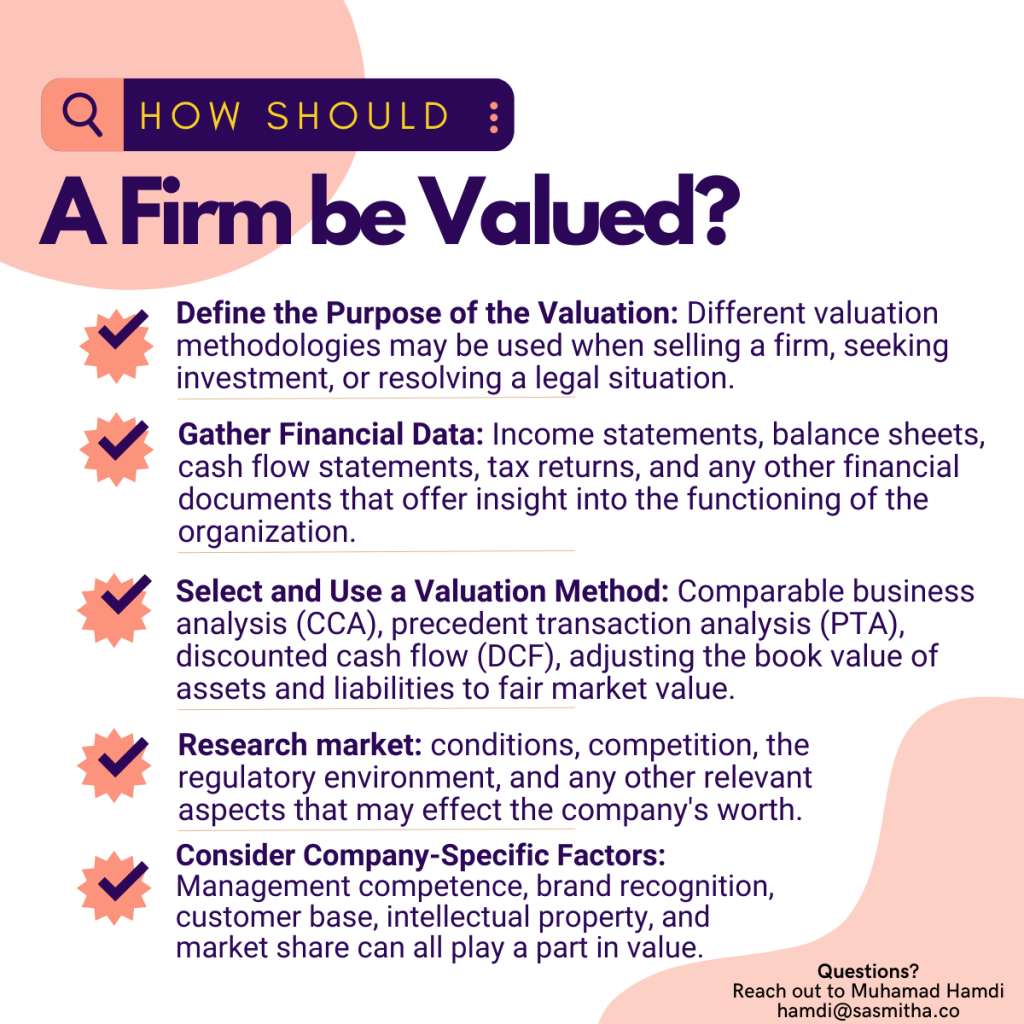
- Define the Purpose of the Valuation: Different valuation methodologies may be used when selling a firm, seeking investment, or resolving a legal situation.
- Gather Financial Data: Income statements, balance sheets, cash flow statements, tax returns, and any other financial documents that offer insight into the organization performance.
- Select and Use a Valuation Method: Comparable business analysis (CCA), precedent transaction analysis (PTA), discounted cash flow (DCF), adjusting the book value of assets and liabilities to fair market value.
- Research market conditions, competition, the regulatory environment, and any other relevant aspects that may effect the company’s worth.
- Consider Company-Specific Factors: Management competence, brand recognition, customer base, intellectual property, and market share can all play a part in value.
It is essential to keep in mind that completing a business valuation may be a challenging task, and the accuracy of the valuation is strongly dependent on the availability of correct financial data and the valuation professional’s skills. It is often advised to seek the aid of a professional business appraiser or financial expert with experience doing business appraisals.
 Sasmitha.co